
Interaction of Systems, Leadership Empowerment, and People Connection
July 6, 2026 – Danilo Rodrigues Santos
How Systems Design—and Leadership Accelerates—the Journey Toward Organizational Excellence
The Journey Begins
Vale, a Brazilian mining company focused on iron ore and base metals, has been in operation for over 80 years and has a presence in several countries around the world. In addition to offices and headquarters in the main regions of the country, Vale has complex production corridors in Brazil involving mine, railway, and port operations. A primary asset of this infrastructure is the Carajás Railway (EFC). For over 40 years, the EFC has been considered a vector of regional development, boosting the economy of two states and generating employment, income, and inclusion in its operation. The people in this operation have diverse origins, encompassing the entire spectrum of the Brazilian population.
In the northern region of Brazil, the railway maintenance operations of Vale have been guided by its Operational VP of iron ore business since 2023, with the aim of maturing the current management model and updating its processes. The Shingo Model has provided a framework for this transformation, offering insights into the guiding principles necessary for a successful journey.
Employee Engagement
Leveraging the Shingo Model at EFC involved approximately 500 people, including leaders, administrators, and operators across the value stream. The leaders possess technical profiles obtained through specific trainings as well as throughout their careers, having started at the railway at the operational level and developed into leadership positions.
I joined the company in 2013 as a Railway Engineer. Since then, I have been able to work on processes such as locomotive reliability, and as a supervisor, I have led predictive, preventive maintenance teams and rolling stock components maintenance. I assumed a managerial position, in which I was able to exercise leadership of an operation considering strategic decisions involving people, cultural transformation, investments, and the performance of equipment and processes.
The “Ricardo Dominici” Strategic Room
To support the Shingo journey, a strategic room was established at the Wheelset Exchange and Maintenance Complex so that participants could share ideas freely and communicate clearly (see Figure 1). The intention was to create a reference point for experiencing the Shingo Challenge—a common space where everyone could interact and exchange achievements and learnings about the Shingo Model.
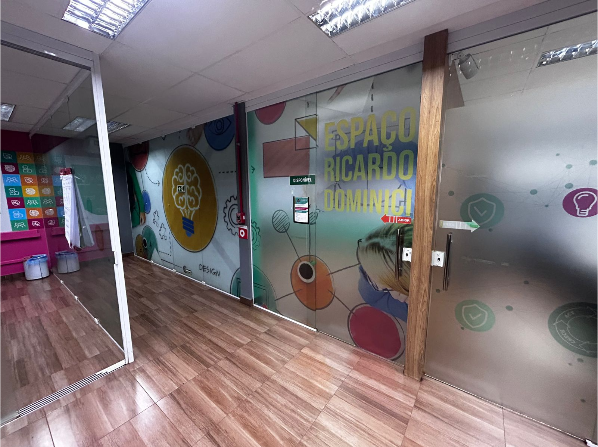
Figure 1 – “Ricardo Dominici” Strategic Room
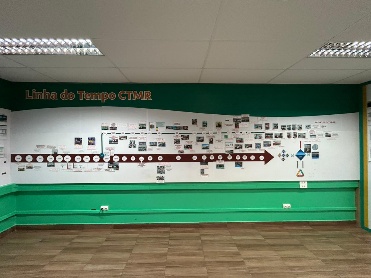
Figure 2 – Timeline with main achievements and “Quick Wins” milestones
This room was named to honor Ricardo, one of our finest. With 36 years at the company, Ricardo has helped build a legacy of sharing knowledge with new generations and has a deep commitment to developing new ways to do the work and improve. Throughout his career, Ricardo has held positions as an operator, instructor, and specialist. Currently, he works in the engineering department as a project implementation analyst for new technologies to maintain railway components.
In this space, after we concluded the DISCOVER EXCELLENCE and SYSTEMS DESIGN workshops, we began developing our systems, including their scope, objective, frequency, and actions, to improve our KPIs and KBIs. After each session, the group used the room to discuss the impact each system has on the others.
The room also became a place to make progress visible. For example, key milestones were documented and celebrated by the entire team in a timeline plot (see Figure 2), allowing us to see the evolution of the journey. In addition, we created a Scrum Board to track actions and ask for help if needed, as well as a Gantt chart to follow the implementation over time and manage the tasks needed to enable each step. This created a clear visual of the time-based evolution of the entire journey.
Managing Systems
To operationalize systems, we defined KPIs and KBIs aligned to the work. For example, in the wheelset replacement system, one KPI is the timely replacement of wheelsets. The associated KBI verifies whether operators check that the initial condition of the workstation meets the defined standard. Meanwhile, in the wheelset maintenance system, the component availability KPI measures adherence to the delivery plan to verify if operators are aware of the demand for the period and monitor whether they are making gains/losses when performing their activities.
Ownership & Integration
We enhanced the journey by defining a sponsor for every system and subsystem. This commitment to the development of each system and all related content brought us to an even higher level of maturity. The work systems developed during the journey (Figure 3) include Train Operation, Asset Monitoring, Maintenance Planning and Control, Wheelsets Exchange, Wheelsets Re-manufacturing, Industrial Equipment Maintenance, Operational Center, and Engineering. The following improvement subsystems (Figure 4) were defined to support the evolution of the work systems: Daily Routine Management, Leader Standard Work, Standardization, Basic Guidelines, 5S, Problem Solving, Strategy, Safety, Recognition, Customer Relationship, Communication, Ability Development, Reliability, and Financial. A best practice that emerged was Go & Observe Gemba walks to identify opportunities, provide feedback, and identify actions we could take to keep the systems evolving as an interconnected matrix.
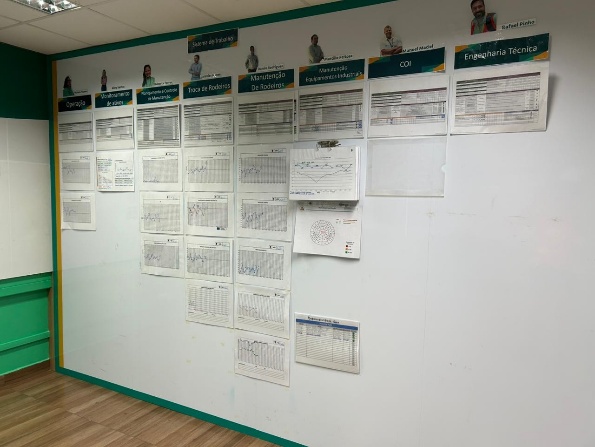
Figure 3 – Work Systems and Sponsors
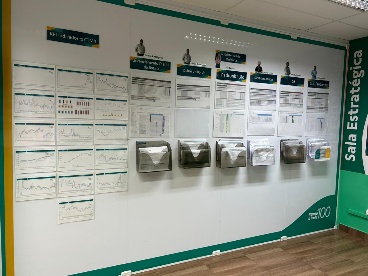
Figure 4 – Improvements Subsystems and Go & Observe forms
These one-hour sessions occurred every week and followed a structured agenda:
- Minute 0–10: verify actions and update tasks
- Minute 10–50: presentation on every system/subsystem, including discussion of next actions; check KPIs and KBIs; celebrations for goals achieved, “Quick Wins”; share the timeline
- Minute 50-60: lessons learned and next steps.
Cultural Outcomes
Throughout the journey, we learned that when an environment is created where people with different ideas and opinions work toward the same purpose, it’s possible to accelerate excellence, fostering collectivity, humility, and learning. The defined work and improvement systems shaped the behaviors of those involved, who connected to the work both rationally and emotionally. Everyone’s efforts were valued, and each goal achieved energized others. Leadership played a fundamental role; by actively listening, they were able to understand the demands placed on the team and guide everyone in a way that felt supportive and directed the necessary resources. These efforts were rewarded with the prestigious Shingo Silver recognition. This verifies that the Shingo Model was able to catalyze the expected transformation at the site. There are plans in place to deploy the approach at several other sites striving to attain Shingo recognition. In this way, other units will be enabled to evolve their people and processes, supported by management models, tools that drive results by defining systems and subsystems, and the direct participation of each individual.